
Duchenne-Opedia
Find a glossary of helpful terms that are commonly used when discussing Duchenne treatment and care management.
There’s a lot to understand about Duchenne muscular dystrophy (DMD)—
discover answers to commonly asked questions from Duchenne caregivers.
Meet Tripp—he is living with Duchenne and he is a paid ambassador.

Read these answers to some common questions related to dystrophin.
Duchenne muscular dystrophy (“Duchenne” or “DMD”) is a genetic condition where muscles progressively become damaged and weaker over time. This rare disease is caused by a genetic mutation to the dystrophin gene (“DMD gene”), which causes people living with Duchenne to have little to no dystrophin—a vital protein which helps to strengthen and protect muscles. Without usable dystrophin, people with Duchenne gradually lose healthy muscle tissue, which can lead to physical and developmental difficulties.
Dystrophin is an essential protein for muscle function. It’s part of a group of proteins (a “protein complex”) that all work together to strengthen and protect muscles as they contract and relax. People with Duchenne have a genetic mutation that prevents their body from making usable dystrophin. Without usable dystrophin, their muscles are more sensitive to damage and injury and thus get progressively weaker, leading to mobility issues.
For a person with Duchenne, dystrophin can be increased using 2 different types of therapy: exon-skipping therapy and gene therapy. Each therapy allows the person’s body to create a shorter but usable dystrophin protein. Exon-skipping therapy makes a dystrophin protein that’s 84% to 97% (for the most common mutations) as long as the dystrophin protein made by someone without Duchenne. Gene therapy makes a micro-dystrophin protein that’s 32% to 40% as long as the dystrophin protein made by someone without Duchenne.
Read these answers to some common questions about signs and symptoms.
Duchenne is unique to each individual; however, someone with Duchenne will typically show some of these early signs between birth and age 5 years:
As children with Duchenne get older, muscle weakness continues to progress. In school-age children, you may see weakening of the arms and legs, increased difficulty climbing stairs, tiring easily when walking or playing, loss of balance, cognitive and behavioral challenges, and the early stages of cardiomyopathy.
In late childhood and the
teenage years, symptoms typically progress to the loss of ambulation (ability to walk), curving of the spine (scoliosis), increasing cardiomyopathy symptoms, and effects on respiratory function (weakened breathing muscles and cough, difficulty clearing mucus, infections).
Adults with Duchenne will likely experience increased difficulty with arm and hand function, advanced cardiomyopathy, increasing need for help with daily tasks (eating, personal care) and hobbies, and greater need for breathing assistance.
Cardiomyopathy is a general term for any disease of the heart muscle. In Duchenne, the lack of dystrophin damages the heart muscle. This can lead to cardiomyopathy and weakening of the heart over time, making it harder to pump blood throughout the body. Most children and young adults with Duchenne will develop cardiomyopathy. In fact, 60% of boys with Duchenne show signs of cardiomyopathy by age 10 years, and that number increases to 90% by age 18 years.
Unlike the decline of other muscles that are more visible, cardiomyopathy can begin
before symptoms are noticeable. It’s also easy to assume that some of these symptoms are being caused by other Duchenne complications, so it’s very important to be proactive about heart health. This means scheduling regular checkups
with a cardiologist as part of
your Duchenne care plan
starting at a young age.
Read these answers to some common questions about living with DMD—all given by caregivers of people with Duchenne.
“I thought I was alone, but I realized Duchenne is more common than I thought. I had never heard of it before, but once my son was diagnosed, now we hear about new cases all the time.”
—Andrea, mom to Nathan
“I learned a few important things. First, not only can Duchenne be inherited from the mother, but it can also happen spontaneously, which was the case with Emmett. Also, the dystrophin gene is the largest human gene, and with 79 exons, so many different deletions can lead to DMD. Plus, when you hear about how dystrophin affects the skeletal muscles, you don’t realize how it also affects the heart, lungs, and brain.”
—Liz, mom to Emmett
“As soon as we learned Nathan had Duchenne, we knew we wanted to fight it the best we could. Early on, we connected with an amazing Duchenne advocate and mom and her organization, Team Joseph. She’s passionate and she inspired us.”
—Andrea, mom to Nathan
“When Emmett’s neurologist first gave me his diagnosis, he brought up exon- skipping as a possible treatment because of Emmett’s deletions. We were very hopeful and started to inquire about the treatment right away. We wanted to do anything possible to keep our baby boy healthy and mobile as long as possible.”
—Liz, mom to Emmett
“Nathan was diagnosed at a great hospital. We decided to visit an official Duchenne center. There, we learned about an exon-skipping trial and were very happy to learn that Nathan was one of the boys who could benefit.”
—Andrea, mom to Nathan
“Our first question after his diagnosis was, are any treatments available? We discussed steroids first, and then his doctor said Emmett qualified for an exon-skipping therapy that would help him produce a shorter version of the dystrophin protein that he needs.”
—Liz, mom to Emmett
“When we learned about the trial, we didn’t care what treatment it was. We wanted to try anything. Nathan was only 7, and we wanted to be aggressive early on. We knew it would be difficult to travel to another city every week, but we felt confident we could make it work; and if Nathan’s body produced even a little dystrophin, the trial would be worth it.”—Andrea, mom to Nathan
“When Emmett was first diagnosed in March 2020, we were told only one exon-skipping therapy was available for his deletions, but others were coming in the near future. We wanted to get Emmett on anything that was available right away, so that’s how we started his first exon-skipping therapy. After about a year, our neurologist brought up the idea of switching Emmett to another exon-skipping therapy. She gave us data comparing the 2 and showing the increased dystrophin production with the other therapy. After looking at the data and reaching out to support groups, we decided to make the switch.”
—Liz, mom to Emmett
“The therapy was relatively simple. Nathan did whatever the nurses needed him to do, and he never complained about the IV. It took about 2 hours, and he always enjoyed a good lunch! We became very close to his amazing nurses, doctor, and staff. They all took great care of him. The difficult part was the traveling, taking Nathan out of school one day a week and splitting up time with our other son. But we were able to make it work. After the first year and a half, the travel became daunting, so we were thrilled when we were able to start his infusions at home.”
—Andrea, mom to Nathan
“Besides the roller coaster of emotions waiting for insurance approval, we haven’t had any issues starting Emmett on exon-skipping therapy. We have a set routine and aim to do them right around bedtime. We opted to get Emmett a Mediport, which in my opinion was the best decision ever.”
—Liz, mom to Emmett
“We were fortunate to connect with Team Joseph and other organizations early on and meet with other Duchenne parents. Social media helped us too, although this became overwhelming, so we’ve pared back on our connections over the years. We became close to a couple of families during the trial, as well, and that truly helped.”
—Andrea, mom to Nathan
“At first, we didn’t know where to look. We did a lot of research online, explored some nonprofit organizations and joined Facebook support groups, and multiple people there reached out to us to share their stories and help us navigate where to go. We’ve also been very involved with PPMD, Parent Project Muscular Dystrophy, and they’ve been a great resource for our family.”—Liz, mom to Emmett
Read these answers to some common questions about exon-skipping therapy.
Exon-skipping therapy is one way to increase dystrophin in a person with Duchenne. By “skipping” a section of the dystrophin gene, it helps the person make usable dystrophin within their own body. Exon-skipping therapy is given to people on a regular basis (such as every week) through intravenous (IV) infusion, which can sometimes be given in the person’s home.
Each therapy works in a different way to help a person with Duchenne. Exon-skipping therapy helps the person’s body bypass their existing genetic mutation, while gene therapy inserts a new, engineered micro-dystrophin gene into the person’s muscle cells. Another difference between these therapies is the actual length of the dystrophin protein that is made. With exon-skipping therapy, the dystrophin protein made is about 84% to 97% as long as the full-length dystrophin (for the most common mutations) protein made by someone without DMD. With gene therapy, the dystrophin protein made is about 32% to 40% as long as the full-length dystrophin protein made by someone without DMD.
A simple genetic test can help identify the mutated sections of exons. Speak with a doctor to learn whether your child is amenable to exon-skipping therapy.
Find a glossary of helpful terms that are commonly used when discussing Duchenne treatment and care management.
Learn about our patient advocacy group partners who are here to help guide and support your family through the Duchenne journey.
Sign up to receive helpful Duchenne resources.
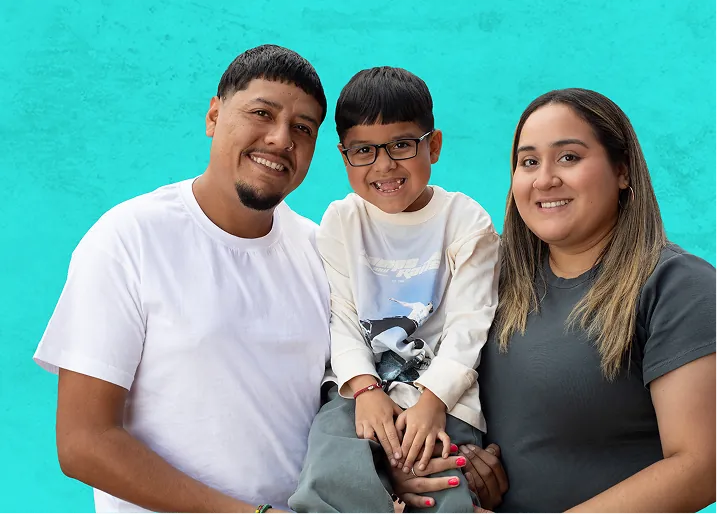
Meet Diego—he is living with Duchenne and he is a paid ambassador.